Access Denied: Banks Globally Are Silently Shutting You Out
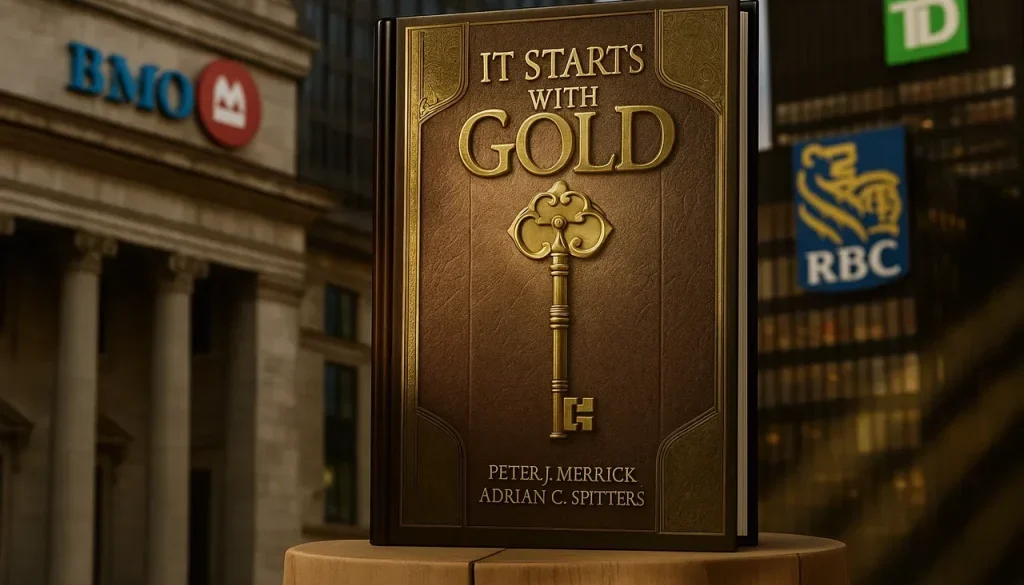
By Peter J. Merrick, TEP® and Adrian C. Spitters, CFP®, co-authors of the international bestseller It Starts With Gold™ and the forthcoming book Guns, Gold & Land™
This analysis continues a series of long-form investigations published in The Merrick Spitters Reset Report™
From Canada to the World: Banks Are Redrawing the Line of Access
The urgent themes discussed in this article are expanded on in our #1 international best-selling book, It Starts With Gold™, co-authored by Peter J. Merrick and Adrian C. Spitters. In the book, we reveal how financial infrastructure is being weaponized through opaque policy, digital surveillance, and derisking practices to isolate dissent and restructure ownership. Visit www.ItStartsWithGold.com.
A letter in the mail. A few lines of legalese. And just like that, your financial identity is erased.
Canadians across the country are waking up to a chilling reality. Banks can now close your accounts, cancel your credit, and walk away without explanation, accountability, or legal consequence. This growing phenomenon, known as debanking, is quietly transforming everyday citizens into digital exiles.
The New Blacklist Has No Rules
Recent disclosures obtained through Access to Information requests confirm that more than 800 Canadians have been debanked over the past five years without ties to terrorism or money laundering. The Financial Consumer Agency of Canada reported over 89,000 banking complaints in a single fiscal year.
But these numbers only scratch the surface.
Under pressure to avoid controversy and regulatory penalties, banks are no longer assessing risk. They are eliminating it by eliminating you.
The Hidden Cost of Compliance
Laws like the Proceeds of Crime (Money Laundering) and Terrorist Financing Act have given Canadian financial institutions vast powers to flag activity they deem suspicious. But suspicion today no longer requires evidence. It only requires fear.
Caught in the widening dragnet are small business owners, immigrant entrepreneurs, cryptocurrency professionals, and individuals who donate to the wrong political cause. Even experts in anti-money laundering policy have found themselves blacklisted by the very system they once helped enforce.
This is not a security policy. It is a purge.
Crypto, Culture, and Convoy Ties
Bitcoin entrepreneur Adam O’Brien had every major Canadian bank sever ties with his firm and his family. His wife’s personal account was closed despite being entirely separate from his business.
A Nigerian-born business owner in Toronto saw four personal accounts shut down. One bank demanded he relinquish signing authority from a firm he co-owned, even as it continued to bank his white business partners.
Participants in the 2022 Freedom Convoy protest had over $7.8 million in accounts frozen under emergency powers. At least 267 accounts and 170 bitcoin wallets were flagged. Many donors had contributed only modest amounts. Some were added to blacklists quietly shared across international banking networks.
You are not allowed to question. You are not allowed to explain. You are not allowed to bank.
A System Without Oversight
Banks must give notice when they close your accounts. But they do not have to tell you why.
The Ombudsman for Banking Services and Investments can only confirm if procedures were followed. It cannot force a bank to reopen an account.
Legal challenges are ineffective. One entrepreneur spent over $20,000 fighting his case through the Canadian Human Rights Tribunal. His claim was dismissed. He never received an explanation.
There is no law in Canada that guarantees the right to a bank account. There is no public authority with the power to reverse a debanking decision.
This is not collateral damage. This is coordinated control.
Data Harvesting, No Due Process
Between 2019 and 2024, Suspicious Transaction Reports filed with FINTRAC rose by more than 60 percent, from 386,000 to over 631,000.
Yet criminal prosecutions declined. In 2019 to 2020, only 41 charges were laid nationwide.
The surveillance machine is expanding. But the justice system is shrinking.
Asset Conservation in a Weaponized Economy
As access to the financial system becomes conditional on behaviour, compliance, and political allegiance, Canadians must secure what cannot be digitally erased or institutionally revoked.
In It Starts With Gold™, we introduce the principle of Owning Assets in Order of Asset Confiscation, a strategy designed to help individuals prioritize what they can physically own, legally protect, and ultimately control when systems fail.
The further removed your assets are from centralized oversight and institutional dependence, the stronger your defence against confiscation, debanking, or surveillance. The most secure assets are those with real utility, private custody, and long-term legal protection.
This is not theory. It is the foundation of financial survival.
At the core of this philosophy are the Four Critical Pillars of Financial Survival, a structural framework that transforms asset conservation from an idea into action.
The Four Critical Pillars of Financial Survival
Gold and Precious Metals: The most resilient form of wealth. Gold is tangible, portable, and immune to digital interference. It operates outside the reach of institutional seizure and retains its value in every economic regime. This is your foundation.
Alternative Investments: Diversified, non-correlated assets such as farmland, private income-producing real estate, and infrastructure offer both stability and utility. These assets are rooted in productivity and sovereignty, providing income and protection during periods of market dislocation or systemic failure.
Active Discretionary Private Portfolio Management: Professionally managed portfolios held within legally segregated custodial structures offer superior security compared to pooled brokerage accounts. These structures create a legal firewall between you and the institution, significantly reducing counterparty risk.
Financial Instruments from Mutual Life Insurance Companies: Mutual insurers are owned by their policyholders, not traded on public stock markets. Their products, especially participating whole life insurance, offer contractual guarantees, stable returns, tax advantages, and long-term security that are legally and structurally difficult to penetrate or confiscate.
This framework is not just about protecting wealth. It is about preserving sovereignty.
If your access to the financial system vanished tomorrow, what would you still own? What would remain untouched? That is the measure of true security.
We recommend building multiple banking relationships with minimal cash at each, reducing digital exposure, and choosing financial partners that prioritize your autonomy, not just their compliance.
These Four Pillars are not speculative opportunities. They are your last line of defence in a financial system that increasingly punishes independence and rewards submission.
The time to act is not after the collapse. The time is now.
This Is Not Just a Canadian Crisis
Canada is only the prototype.
In the United Kingdom, bank accounts have been closed due to political views. In the United States, digital asset regulation and crowdfunding restrictions mirror Canada’s strategy.
If peaceful protestors in Canada can be financially erased for making a $20 donation, there is no country immune.
What Can Be Done?
The solution begins with decentralization. Real assets. Real ownership.
It Starts With Gold™ outlines exactly how to protect yourself from the encroaching digital trap.
If Canadians want a financial system that serves people instead of power, the time to act is now.
Demand transparency. Build resilience. Abandon illusions.
Because soon, access will no longer be denied. It will simply never be offered again.
To learn how to secure your wealth against debanking, confiscation, and collapse, order your copy of It Starts With Gold™ from Amazon today. CLICK HERE
References:
- Canada’s Banks Are Increasingly Closing Accounts Without Explanation as They Fight Financial Crime
- Understanding Debanking: The Rising Trend of Account Closures and How to Protect Yourself in Canada
- Over 800 Canadian bank account holders ‘debanked’ since 2018: Report
- FCAC 2024 Annual Report
- FINTRAC Suspicious Transactions Data
- OBSI Banking Complaints
- Blacklock’s Reporter, Access to Info on Debanked Canadians
- Canadian Bankers Association Statements