
Why Your Portfolio May Not Be As Safe As It Looks
By Adrian C. Spitters, CFP® and Peter J. Merrick, TEP®
This analysis is part of an ongoing series of long-form investigations published in The Merrick Spitters Reset Report™ that examine long-term developments affecting property rights, governance systems, and financial architecture.
What Many Families Are Starting To Notice, But Cannot Fully Explain
This article represents the investor-level experience of the structural and portfolio dynamics explored in The Quiet Rotation Beneath The Market Surface and The Quiet Risk Inside Your Portfolio Structure. Together, those analyses examine how capital flows, liquidity conditions, and portfolio construction are evolving beneath the surface, and how those changes are now beginning to affect real-world outcomes for investors.
Many families are starting to notice something that is difficult to fully explain. On the surface, their portfolios still appear stable. In many cases, values have not declined in a dramatic way, and statements continue to show familiar holdings and broadly balanced allocations. At the same time, the sense of confidence that once came from reviewing those statements is no longer as strong or as consistent as it used to be.
Returns are not behaving in the same way. Volatility feels less predictable, and income assumptions tied to real estate or traditional investments are beginning to shift. Decisions that were once straightforward are now approached with more hesitation, not because of a single event, but because the conditions supporting those decisions feel less certain. This creates a form of quiet tension where nothing appears obviously wrong, yet something no longer feels as stable as it once did.
For many, that is the first indication that the issue may not be the market itself, but the structure behind the portfolio.
For some, this remains a general concern that is difficult to define. For others, it becomes a more direct question about whether the structure behind their portfolio is still functioning in the same way it did under previous conditions. What many are sensing is not a single disruption, but a change in how the system itself is operating.
This change is often interpreted as the beginning of a broader market decline. In practice, it is more accurately understood as a shift in how capital is moving through the system. As outlined in The Quiet Rotation Beneath The Market Surface, capital is not disappearing but repositioning, and as it moves, some assets are repriced while others stabilize or strengthen. This creates different outcomes depending on how capital is allocated, how exposure is managed, and how dependent a portfolio is on conditions that may no longer be as stable as they once were.
This system-level shift becomes more visible when examined at the portfolio level. As explored in The Quiet Risk Inside Your Portfolio Structure, portfolios that appear diversified on the surface can behave very differently depending on how they are constructed, how decisions are made, and how exposed they are to the same underlying forces. In this environment, outcomes are increasingly influenced not just by what is owned, but by how those assets are positioned within a changing system.
This is where the distinction begins to matter. When conditions change, outcomes are no longer determined by markets alone. They are determined by how a portfolio is structured, how decisions are made, and how much flexibility exists to adapt as those conditions evolve.
The Hidden Risk Most Investors Do Not See
For years, many portfolios have been built around the idea of diversification. If capital is spread across different investments, the thinking goes, risk is reduced. In practice, this worked well during a long period where markets were supported by falling interest rates and abundant liquidity.
That environment is changing. Today, many investments that appear different on the surface are influenced by the same underlying forces. Large portions of the market are driven by a relatively small number of companies and by the same flow of capital moving through index-based strategies.
This means that what looks like diversification can behave more like concentration, especially when conditions begin to shift. When those concentrated areas of the market come under pressure, portfolios can move more uniformly than expected.
For a family relying on their portfolio for long-term security, this can come as a surprise.
Why Two Similar Portfolios Can Produce Very Different Results
A question that often arises in this environment is simple. How can two portfolios that look similar produce very different outcomes?
The answer usually comes down to how those portfolios are managed.
Some portfolios are designed to closely follow the market. They rise when the market rises and fall when the market falls. This approach feels familiar and predictable when markets are stable, but it also means the portfolio is tied to whatever is happening within the index, including its areas of concentration.
Other portfolios are managed differently. They are not required to follow the market. Instead, decisions are made about where to reduce risk and where to allocate capital based on changing conditions.
Portfolios managed with full discretion operate under this second approach. They are able to adjust exposure as conditions evolve, rather than remaining fully aligned with the same parts of the market that may be under pressure.
For families, this difference often becomes visible only when markets begin to behave differently than expected.
This is where the distinction between strong hands and weak hands becomes visible. Weak hands are tied to structures that require them to follow the market regardless of conditions. Strong hands are structured to adjust, reduce exposure when risk increases, and reallocate capital as conditions evolve. The difference is not insight. It is positioning.
This is explored further in The Quiet Risk Inside Your Portfolio Structure, where the focus shifts from system-level dynamics to how those dynamics show up directly within portfolios, and why similar portfolios can now produce very different results depending on how they are managed.
When Markets Change, Structure Matters More Than Performance
In stable environments, performance tends to be the focus. Which portfolio is performing better this quarter or this year. In changing environments, a different question becomes more important. How is the portfolio structured, and how will it behave if conditions continue to shift.
Markets today are being influenced more by liquidity and capital flows than by simple valuation alone. When liquidity is strong, markets can appear stable even when risks are building beneath the surface. When liquidity tightens, those same risks can surface quickly.
This is why portfolios that rely heavily on public markets can experience sudden changes in value. When selling begins, it can accelerate as other participants are forced to sell as well. This is not driven by emotion alone. It is driven by how the system operates.
Portfolios that include a broader range of assets, including those that are not priced daily and that generate income from real-world activity, tend to behave differently. They are not immune to change, but they are less dependent on a single source of market liquidity.
Ownership And Control Are Not The Same Thing
Another area that is often overlooked is how assets are actually held.
Most financial investments are held through layers of institutions such as brokers and custodians. Under normal conditions, this works smoothly and efficiently. Investors see their holdings, receive statements, and can transact when needed.
However, this structure means that ownership is often indirect. Access and control depend on the systems and institutions that sit between the investor and the asset.
For many families, this is not a concern until conditions become less stable. At that point, questions begin to arise. How quickly can assets be accessed. What happens if markets become dislocated. How much control is there over decisions.
This is where the idea of Owning Assets In Order Of Asset Security™ becomes more practical. It is not simply about what is owned, but how it is owned, how it is controlled, and how resilient that structure is under different conditions.
For some families, these ideas are formalized into structured approaches such as the Five Pillars of Asset Security™, which provide a way to think about control, flexibility, and long-term resilience.
Why This Feels Unsettling, And Why That Is Reasonable
The sense that something is changing is not unfounded. The financial system is moving through a transition. Interest rates are no longer moving in the same direction they did for decades. Liquidity is becoming more selective. Capital is more concentrated.
At the same time, the messages many investors hear remain broadly reassuring. Markets will recover. Stay invested. Maintain a long-term view. These statements are not necessarily wrong, but they do not fully explain what is happening beneath the surface.
This creates a gap between what is being experienced and what is being communicated.
For many, that gap is where confidence begins to shift, even if no single event has occurred to explain it.
This gap often leads to the perception that outcomes are being influenced or controlled in ways that are not fully visible. In practice, what appears as imbalance is often the result of structural differences. Institutional participants operate with different tools, mandates, and flexibility, allowing them to respond to changing conditions in ways that are not always available to individual investors.
Recognizing that gap does not mean something catastrophic is imminent. It simply means that conditions are evolving, and understanding those changes becomes important.
What Families Can Do At This Stage
At this stage, the objective is not to predict what markets will do next, but to understand how your current portfolio is positioned across a range of possible outcomes. This includes identifying where concentration exists, how dependent the portfolio is on liquidity, and whether sufficient flexibility is built into the structure to adapt as conditions evolve.
This environment does not call for reactive decisions or dramatic shifts. It does call for a more deliberate understanding of structure.
For many families, the most productive step is to review how their portfolio is structured. This includes understanding how decisions are made, how exposure is distributed, and how assets are held.
It also involves asking whether the current structure is designed to adapt to changing conditions or whether it is primarily tied to how markets behaved in the past.
In many cases, this process brings reassurance. In others, it highlights areas where adjustments may be considered.
A Calm, Clear Next Step
The goal is not to predict exactly what will happen next. It is to ensure that the structure in place is capable of responding to a range of outcomes.
For many families, the most productive step is to step back and evaluate how their portfolio is actually structured. Not just what is owned, but how decisions are made, how exposure is managed, and how much flexibility exists to adapt as conditions evolve.
This is not about reacting to markets. It is about understanding whether the current structure is aligned with the conditions that are already beginning to take shape.
For many, that evaluation happens only after conditions make that awareness necessary.
This is where the concept of Owning Assets In Order Of Asset Security™ becomes central. It provides a framework for understanding how capital is positioned, how it is controlled, and how resilient that structure is when conditions begin to change. In an environment where outcomes are increasingly driven by structure rather than markets alone, this becomes a practical approach to protecting capital.
For those who want a deeper understanding of how these structural changes are unfolding, The Quiet Rotation Beneath The Market Surface and The Quiet Risk Inside Your Portfolio Structure provide the system-level and portfolio-level context behind what many are now experiencing.
A full understanding of what is happening requires viewing this from three levels: the system-level structure in The Quiet Rotation Beneath The Market Surface, the portfolio-level implications in The Quiet Risk Inside Your Portfolio Structure, and the investor-level experience described here. Each layer explains a different part of the same shift, and together they define how outcomes are now being determined.
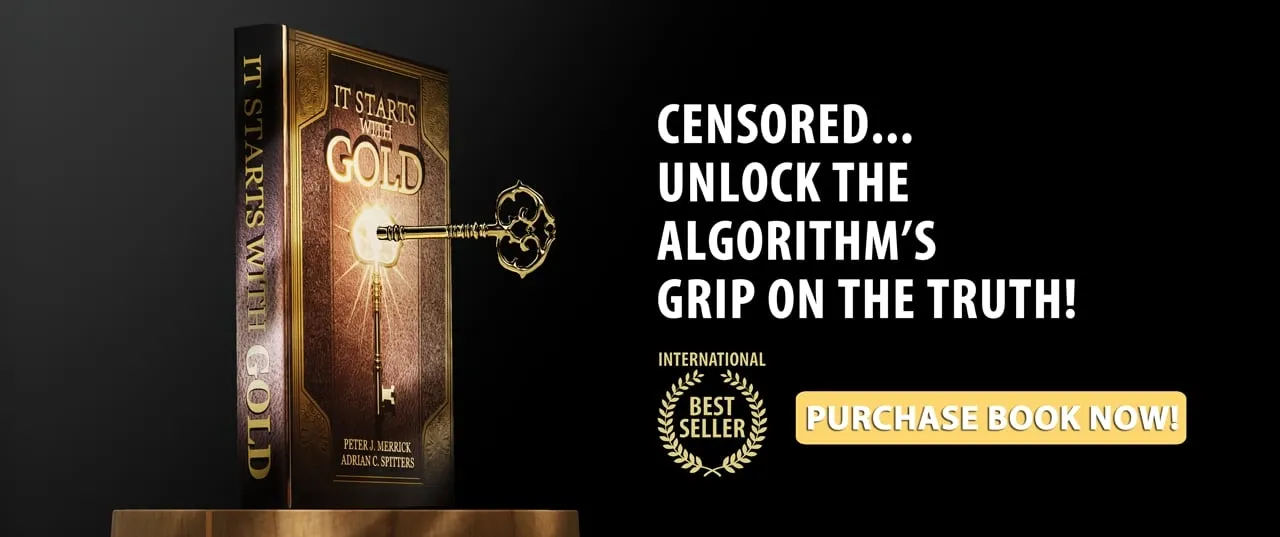
The book It Starts With Gold™ extends this perspective by outlining how to think about asset positioning when traditional assumptions begin to change, starting with gold as a foundational layer within the framework of Owning Assets In Order Of Asset Security™.
Ongoing analysis is available through The Merrick Spitters Reset Report™, where these themes are continually examined as conditions evolve. Subscribing provides a way to stay ahead of how these changes may impact capital over time.
For families beginning to see differences between expected and actual outcomes, a confidential portfolio review provides an opportunity to assess whether the current structure is aligned with current conditions and where it may be strengthened before those differences become more pronounced. You can arrange a confidential portfolio review using the following Calendly Link.
Final Note
This is not about reacting to fear. It is about understanding how the system is changing and making sure your structure is prepared for it.
About the Authors
Adrian C. Spitters is a veteran private wealth advisor with more than thirty-eight years of experience in risk management, long-term financial planning, and asset protection. Raised on a dairy farm in British Columbia’s Fraser Valley, he brings a grounded understanding of land stewardship and the economic pressures facing Canadian families. Adrian advises business owners, professionals, and farm families on practical strategies to safeguard their wealth from financial, legislative, and global-system risks. His work integrates strategic planning with real-world insight from decades in the financial sector. Read Adrian C. Spitters’ full biography here.
Peter J. Merrick is an international speaker and educator in the fields of succession, pension, and wealth preservation. He has spent more than three decades advising business owners, professionals, and family enterprises on how to structure, protect, and transition wealth across generations. His work blends technical expertise with clear, accessible guidance that helps Canadians prepare for economic and legislative uncertainty. Peter has authored multiple bestselling books and continues to contribute to national discussions about financial resilience and sovereignty. Read Peter J. Merrick’s full biography here.
This discussion is intended for general informational purposes and to support informed decision-making. Individual circumstances vary, and decisions should be made in consultation with appropriate professional advisors.