Who Holds Your Investments in a Crisis?
The BIS, IMF and Bank of Canada warn of strains that could leave investments visible on a statement while the institutions controlling access struggle to release cash.
By Adrian C. Spitters, CFP®, FCSI®, CEA and Peter J. Merrick, TEP® | Co-Authors, It Starts With Gold™ | Co-Creators, The Merrick Spitters Reset Report™
What Your Account Statement Does Not Show
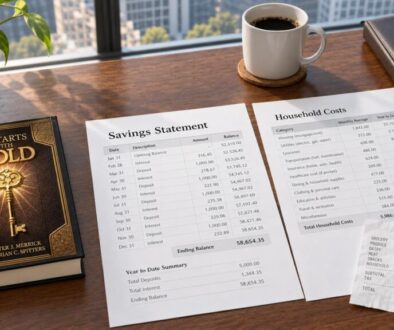
You may have spent decades building a retirement portfolio. Your statement shows what those investments are worth. It does not show the broker, custodian, lender and clearing system between you and your money. When those institutions strain at once, a balance can remain visible while cash is beyond your reach. Who can authorize a transfer? Who could stop it?
Markets do not announce when the chain breaks. A lender withdraws funding, brokers halt transfers and forced sales spread. The holdings remain on a screen while the cash is out of reach.
Why Current Market Warnings Matter
At a November 5, 2026, conference, BIS General Manager Pablo Hernández de Cos described how banks can struggle to turn even high-quality assets into cash during stress. He warned that some non-bank firms can amplify swings in money markets. When institutions hoard liquidity, the route from an investment to usable money can narrow suddenly.
The IMF’s October 2026 Global Financial Stability Report estimated that hedge funds held about US$13 trillion in gross assets. Its concern was leverage and crowded positions. When investors sell simultaneously, stress can reach prime brokers, lenders and collateral markets, turning a price decline into a desperate search for cash.
The Bank of Canada reported about C$300 billion in repo borrowing by Canadian asset managers and more than C$130 billion in daily Canadian repo transactions. U.S. researchers counted over US$13.5 trillion in outstanding repo agreements. These short-term funding chains depend on collateral moving on time. If funding dries up, forced sales can spread through institutions that initially appeared sound.
What Does It Mean to Own Shares?
Many U.S. brokerage shares are registered in street name under a nominee such as Cede & Co., while the customer holds a beneficial entitlement through a broker. Canada’s CDS operates its own central depository. The name on a brokerage statement is not the whole ownership record.
David Rogers Webb offers a far darker warning in The Great Taking. He argues that, in a systemic collapse, secured creditors could claim interests in pooled securities ahead of ordinary investors. He points to U.S. Uniform Commercial Code Article 8, where priority can depend on control of collateral and an intermediary’s shortfall. His warning is not simply about a market decline. It is about investors discovering that another creditor can stand ahead of them when the institution holding their securities fails.
Patrick Wood sounds an even harsher alarm in The New Economics of Technocracy and Crucible of Tokens. In his published introduction to the latter book, he argues that tokenization can leave an asset in place while title shifts elsewhere and the owner receives a digital key governed by another party’s rules. Wood describes a transfer of property rights hidden behind convenience. The screen can still show the investment while the person who paid for it can no longer move it.
Can Your Broker Lend Your Investments?
The decisive words may be buried in a margin agreement or lending consent signed years earlier. If securities have been lawfully lent or pledged, someone else’s failure becomes part of your exposure. Under severe stress, what looked like ownership may become a disputed claim while bills still come due.
Ask your dealer whether the account is cash or margin, whether any securities-lending consent exists and who holds the assets. Request the documents, not a verbal assurance. If those answers are unclear today, they will be harder to obtain when the financial system is under strain.
What Do the Protection Funds Cover?
A bank statement and a brokerage statement can each show money that is not immediately accessible. The protection arrangements behind them differ. For a family, the urgent question is not only what might eventually be recovered, but how expenses will be paid while institutions reconcile accounts and settle claims.
CDIC generally insures eligible bank deposits up to C$100,000 per insured category at a member institution. CIPF covers eligible client property missing after a member dealer becomes insolvent, generally up to C$1 million in the applicable account category. Those amounts do not tell a family when cash would become available during a broader disruption.
What I Would Review Before a Crisis
If you are retired or nearing retirement, start with the assets meant to fund your next withdrawals. Who holds them? What instructions release cash? What happens if markets fall when income is due? Follow the route from each investment to the bank account that pays your bills.
Separate decisions from custody. A discretionary manager may select investments while an independent custodian holds them. This can limit one firm’s control, but it does not answer who may move assets or what happens if either institution stops operating.
I use four tests from Owning Assets in Order of Asset Security™: Control, Access, Independence and Continuity. Who can direct the assets, reach them, reduce dependence on outside institutions and keep the plan functioning if a provider fails?
The Five Pillars of Asset Security™ applies those tests across a wealth plan. Diversification on paper means little if every path to cash passes through the same institutional gates.
Precious metals make the difference visible. Kitco says its unallocated pool customers do not hold title to specified bars or coins. Allocated metal or direct possession creates different claims. The agreement determines what the investor actually owns.
Build the Plan Around Access
In It Starts With Gold™, Peter and I ask what a family truly owns and what it can reach when rules change. Last Asset Standing™ asks whether digital assets remain independent when exchanges, custodians and platforms can restrict access. An entry on a ledger is not the same thing as control of the asset.
I would follow the chain behind every statement: ownership records, collateral rights, transfer authority and the institution that must release cash. Before a crisis, these are questions. During one, they can become barriers.
Continue Your Asset Security Journey™
Follow The Merrick Spitters Reset Report™ for continuing research on money, ownership, Asset Security and family wealth. Subscribe and receive a complimentary digital copy of It Starts With Gold™.
Subscribe to The Merrick Spitters Reset Report™
If you have not reviewed the custody arrangements behind your investments, bring your recent account statements to a complimentary 45-minute virtual introduction with me. We can look at who holds your assets, how they are registered, what access you have and which questions to ask before making a change.
About The Authors
Adrian C. Spitters, CFP®, FCSI®, CEA
Adrian C. Spitters is President and Private Wealth Advisor of PFC Wealth Solutions™ through Performance Financial Consultants Ltd. He is also a Dealing Representative with Axcess Capital Advisors Inc., through which his securities transactions are conducted. He has nearly four decades of experience advising business owners, professionals, farmers, retirees and multigenerational families. Raised on a dairy farm in British Columbia’s Fraser Valley, he focuses on Asset Security, wealth preservation and coordinating specialised professionals around a family’s needs. Adrian is co-author of It Starts With Gold™ and co-publisher of The Merrick Spitters Reset Report™. Read Adrian C. Spitters’ full biography here.
Peter J. Merrick, TEP®
Peter J. Merrick is an international speaker, educator, cross-border specialist and estate planner with more than three decades of experience advising business owners, professionals and family enterprises across Canada and the United States. His work focuses on succession planning, long-term wealth preservation and helping families structure and transition wealth across generations. Peter is co-author of It Starts With Gold™ and co-publisher of The Merrick Spitters Reset Report™. Read Peter J. Merrick’s full biography here.
Disclosure
This article is for general education and does not constitute personal investment, legal, tax or insurance advice. Investment values can fall, liquidity can change and different account agreements produce different results. The appropriate arrangement depends on individual objectives, circumstances, risks, costs and need for access. Review your account documents and consult qualified professionals before changing an investment or custody structure.
David Rogers Webb’s and Patrick Wood’s more severe scenarios are attributed interpretations and predictions, not established outcomes. U.S. laws on securities entitlements and collateral rights distinguish ordinary investor interests from security interests that receive priority under defined conditions. Tokenized assets can provide different legal rights depending on their design. This article does not establish that every brokerage holding is pledged or that tokenization always removes direct ownership.
Canadian rules generally require fully paid client securities to be safeguarded, and participation in a fully paid securities-lending program requires informed client consent. Margin and securities-lending arrangements can create additional exposures. Specific securities on loan may receive different insolvency treatment and protection than fully paid securities held in custody; review the applicable dealer agreement and CIRO rules.
CDIC and CIPF protections depend on membership, eligibility, account category, limits and exclusions. CDIC applies to eligible deposits; CIPF addresses eligible property missing after a member dealer becomes insolvent, not market losses. Neither program establishes a timetable for a requested withdrawal during systemwide disruption. Independent third-party custody can separate functions but does not remove market, operational or custodian risk.
Adrian C. Spitters is a Dealing Representative with Axcess Capital Advisors Inc. Securities transactions are conducted through the dealer. A third-party custodian and any discretionary portfolio manager are separate entities whose responsibilities, regulatory status and protections should be confirmed for the particular arrangement. References to possible structures do not represent a recommendation of a specific provider.
References
- Bank for International Settlements. “The Central Bank Balance Sheet.” Speech by Pablo Hernández de Cos, delivered November 5, 2026.
- International Monetary Fund. “Global Financial Stability Report: Resilience, Risk, and Transformation.” October 13, 2026.
- Bank of Canada. “Non-bank Financial Intermediaries.” Financial Stability Report 2026.
- Bank of Canada. “A Resilient Repo Market Is Important for Financial Stability.” Financial Stability Report 2026.
- Depository Trust & Clearing Corporation. “Issuer Services Frequently Asked Questions.” DTCC Learning Center.
- U.S. Securities and Exchange Commission, Investor.gov. “What Is a Registered Owner? What Is a Beneficial Owner?”
- Canadian Depository for Securities. “Securities Depository and Custodial Entitlement.”
- Canadian Investment Regulatory Organization. “Fully Paid Securities Lending.”
- Canada Deposit Insurance Corporation. “What’s Covered.”
- Canadian Investor Protection Fund. “About CIPF Coverage.”
- Office of Financial Research. “How Resilient Is the U.S. Repo Market to Cyber-Induced Outages?” February 10, 2026.
- Kitco. “Trade Bullion Digitally with Kitco Pool Account.” Accessed November 7, 2026.
- Webb, David Rogers. “The Great Taking.” Version 1.4, February 12, 2024.
- Wood, Patrick M. “The New Economics of Technocracy: You Will Own Nothing.” 2026.
- Wood, Patrick M. “Crucible of Tokens: Tokenization, Stablecoins, and the New Architecture of Global Banking.” 2026.
- Wood, Patrick M. “Excerpt: Introduction to Crucible of Tokens.” Technocracy News, September 29, 2026.
- U.S. Securities and Exchange Commission. “Statement on Tokenized Securities.” January 28, 2026.
- New York State Senate. “Uniform Commercial Code § 8-503: Property Interest of Entitlement Holder.”
- New York State Senate. “Uniform Commercial Code § 8-504: Duty to Maintain Financial Asset.”
- New York State Senate. “Uniform Commercial Code § 8-511: Priority Among Security Interests and Entitlement Holders.”
- Merrick, Peter J., and Adrian C. Spitters. “Last Asset Standing™.” The Merrick Spitters Reset Report™.
- Merrick, Peter J., and Adrian C. Spitters. “Owning Assets in Order of Asset Security™.” The Merrick Spitters Reset Report™.
- Merrick, Peter J., and Adrian C. Spitters. “The Five Pillars of Asset Security™.” The Merrick Spitters Reset Report™.
- Merrick, Peter J., and Adrian C. Spitters. It Starts With Gold™. Book overview.