The Debt Trap Behind Stablecoins Fostering a Global Divide
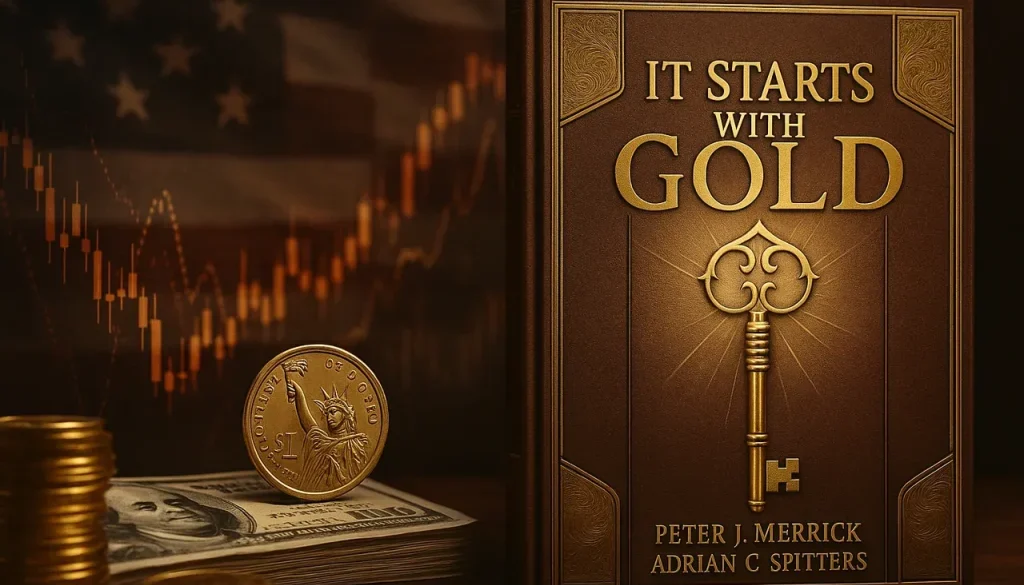
By Peter J. Merrick, TEP® and Adrian C. Spitters, CFP®, co-authors of the international bestseller It Starts With Gold™ and the forthcoming book Guns, Gold & Land™
This analysis continues a series of long-form investigations published in The Merrick Spitters Reset Report™
Why U.S. debt-backed digital money could fracture alliances and reshape freedom worldwide
This article explores the intersection of U.S. debt, stablecoin regulation, and global finance. It examines how proposed legislation like the Genius Act may push the United States deeper into debt dependence while setting up a digital trap that could extend beyond America’s borders. The implications for Canada, the United Kingdom, the European Union, and Australia are profound.
Charlie Kirk’s death and the silence that followed
The sudden death of Charlie Kirk sparked a wave of reactions across political and media circles. While the circumstances remain under investigation, for some it became a moment of solemn reflection. For others, it quickly shifted into broader debates over freedom of speech and political division. While media and political commentators fixate on blame and cultural battles, financial analysts are focused on a different battlefield.
👉 Subscribe to The Merrick Spitters Reset Report™ and receive a digital copy of our international bestseller, It Starts With Gold™, along with our white paper, Last Asset Standing™ and early updates on our forthcoming book, Killing Crypto™.
That battlefield is not the cultural war but the fiscal one. Analysts are warning that the United States is about to experience radical change in its financial system. The debt burden has become unsustainable. Confidence in the United States dollar (USD) is crumbling. Allies and adversaries alike are looking for alternatives.
The United States debt spiral
The U.S. government has entered uncharted territory in its debt management. More than 37.4 trillion dollars in national debt hangs over the country, with unfunded liabilities many times greater. Servicing this debt consumes a growing share of tax revenues. Attempts to cut spending have failed. Deficits continue to expand.
The world is losing faith in the USD. Nations see the printing presses funding endless wars, overseas interventions, and domestic subsidies. Each round of quantitative easing creates more liquidity but no real wealth. The credibility of the U.S. financial order is evaporating.
For families, this means the cost of groceries rising week after week. For retirees, it means savings losing purchasing power with each printing cycle. For young workers, it means mortgage payments swallowing incomes as interest costs rise. Debt is not just an abstract national number. It is a shadow that falls across every household.
It is also a shadow that erodes the future. Generational wealth built up over decades is now at risk of being hollowed out. Pensions, inheritances, and estates tied to debt-based securities could lose value overnight. Families that thought they were leaving a financial legacy to their children may find that legacy erased by decisions made in Washington and executed in digital markets.
The Genius Act and its hidden purpose
Washington has unveiled a new plan. It is called the Genius Act. On the surface, it appears to regulate stablecoins. In reality, it is a mechanism to funnel global money into U.S. debt.
Stablecoins are digital currencies designed to hold a fixed value, usually pegged to the USD. They act as parking spots for traders in volatile markets like Bitcoin and Ethereum. When prices swing, investors exit into stablecoins, maintaining value while waiting for re-entry.
The Genius Act requires stablecoin issuers to hold U.S. debt as backing. This increases artificial demand for Treasuries. By forcing digital asset markets to channel liquidity into U.S. government debt, policymakers hope to extend the life of a failing system.
Supporters present this as innovation. Critics argue it reflects fiscal desperation, a sleight of hand that does not create new wealth. It merely forces more participants into the collapsing debt structure.
Russia’s warning
Anton Kobyakov, a senior adviser to Russian President Vladimir Putin, has gone further than most Western analysts. Speaking at the Eastern Economic Forum in Vladivostok, he argued that Washington intends to rewrite the rules of the cryptocurrency and gold markets in order to offload part of its $37.4 trillion national debt into digital form. He suggested that the United States may attempt to shift Treasury obligations into stablecoins, warning that such a maneuver could resemble past U.S. financial resets. According to his remarks, this would allow America to “move debt into the cloud, devalue it, and start from scratch.” In his view, the strategy echoes the playbooks of the 1930s and 1970s, when Washington reshaped the global order at the expense of others.
Another senior Russian voice, Sergei Kobyakov, repeated the warning in interviews with Russian media. He accused Washington of rewriting the rules of both the gold and cryptocurrency markets, two segments he called “alternatives to the traditional global currency system.” He argued that America’s goal is to restore confidence in the USD by pushing part of its debt into digital stablecoins, devaluing them, and beginning anew.
Both advisers made clear that this would not only strike at foreign governments but also ordinary citizens across the West. Millions of Americans hold Treasuries in retirement accounts. Europeans hold U.S. debt through their banks and institutions. The blow would ripple through pensions, savings, and the very backbone of household security.
Sergei Kobyakov emphasized that Washington has used this pattern before. In the 1930s, citizens lost their gold to confiscation. In the 1970s, the link between the dollar and gold was severed, erasing obligations under Bretton Woods. Now, the danger is that cryptocurrencies will become the new escape valve, debt shifted into the digital “cloud” only to be devalued, leaving households and nations holding worthless claims.
He also issued a sharper warning to Europe. By allowing Washington to set the rules of stablecoins and gold, Europe risks being caught in America’s reset. The European Union’s largest pension funds and banks hold significant U.S. Treasury exposure. A devaluation would not simply hit American savers, it would cascade across European financial systems. Retirees in Germany, France, and Italy could see their pensions shrink. British and Dutch insurance funds could suffer sudden shortfalls. Central European banks, already fragile, could face a liquidity crunch. Ordinary households would be blindsided as the ripple effects turned into rising unemployment, collapsing currencies, and austerity programs.
This is why both Kobyakovs stress that Washington’s maneuver is not just an American problem. It is a Western problem. Europe, by standing too close to America’s financial fire, risks being consumed by the flames.
And the timeline is not distant. Kobyakov warned that the game could end within three to five years. This means today’s stability is temporary. Within the span of a single election cycle, families may find their savings converted into digital claims that no longer hold real value.
Lessons from history
History provides sobering evidence of what Washington is capable of when debt becomes unmanageable.
In 1933, during the depths of the Great Depression, President Franklin D. Roosevelt issued Executive Order 6102. Citizens were ordered to surrender their gold to the Federal Reserve under threat of fines and imprisonment. The government paid a fixed rate of 20.67 dollars per ounce, only to revalue gold shortly after at 35 dollars per ounce. This maneuver devalued the dollar by almost 40 percent overnight and transferred massive wealth from ordinary Americans to the state. Families who had saved diligently in gold saw their assets confiscated and converted into weaker paper claims. Generational wealth was erased by decree.
In 1971, President Richard Nixon unilaterally ended the convertibility of the USD into gold, effectively dismantling the Bretton Woods system that had anchored global finance since 1944. For decades, the dollar had been pegged to gold at 35 dollars per ounce, with foreign governments able to exchange dollars for gold. By severing that link, Nixon defaulted on America’s obligations to the world. The result was a decade of inflation, energy crises, and financial volatility that gutted household purchasing power. Once again, obligations were erased, and the burden was shifted to ordinary citizens.
The warnings from Russia suggest that the United States may be preparing to repeat the same playbook in digital form. This time, instead of confiscating gold or breaking gold convertibility, Washington may push debt into stablecoins and devalue them. The effect will be the same: wealth transferred upward, obligations erased, and ordinary families left holding devalued claims.
The BRICS factor
BRICS, the bloc originally conceived in 2001 by a Goldman Sachs economist, has grown into a financial alliance spanning Brazil, Russia, India, China, South Africa, and more than a dozen aspiring members. BRICS nations are already reducing their exposure to U.S. debt. They are experimenting with alternative payment systems, gold settlements, and regional trade arrangements.
The Genius Act, combined with Washington’s rumored plan to push debt into stablecoins, could push them further away. If stablecoin regulations become a tool for propping up U.S. debt, BRICS will accelerate their detachment from the USD system. This signals a seismic shift.
Offshore migration and real world assets
The United States cannot regulate the globe. If it imposes strict requirements on stablecoins, issuers may simply migrate offshore. Instead of backing their tokens with U.S. debt, they may turn to real world assets like commodities, real estate, or gold. This would drain liquidity from U.S. markets and weaken Treasury demand.
To compensate, Washington will likely target its own citizens with new revenue schemes. A carbon tax system is one possible option. Such a tax would cloak fiscal desperation in the language of climate responsibility while extracting more resources from struggling households.
This means utility bills climbing even higher. It means farmers paying more to operate machinery. It means truckers squeezed by fuel levies that are passed on to consumers. The carbon tax will not fall on Wall Street. It will fall on Main Street.
The hidden risks of stablecoins
Stablecoins are not merely digital parking lots. They come with strings attached. Issuers have the ability to freeze and seize accounts. This is programmable finance disguised as stability. It grants governments and corporations power over transactions in ways cash never did.
Supporters of former President Donald Trump who cheer the cancellation of political opponents online should think carefully. The same tools can and will be used against them. Stablecoins may appear neutral, but they are programmable instruments of control.
Imagine an account frozen because of a social media post. Imagine a business unable to pay suppliers because it failed to meet a carbon quota. Imagine a parent unable to buy groceries because their biometric ID did not sync properly with the database. That is not the future. It is already being tested.
The Vietnam beta test
The path forward is not hypothetical. Vietnam has already implemented a nationwide digital identification (ID) system tied to banking. Citizens and foreign residents are required to provide biometric data to a centralized database. Accounts that do not comply are closed.
Reports from Vietnam’s state media noted that more than 86 million bank accounts are scheduled for closure or deletion as part of a nationwide cleanup of inactive or unverified accounts. Officials describe the measure as fraud prevention tied to biometric verification and digital ID rollout. Critics argue it signals something larger: the creation of a centralized infrastructure where access to finance depends on digital compliance. Whether this is simply modernization or a preview of tighter control remains an open question.
Vietnam is not the endpoint. It is the beta test. Western governments are watching closely. Canada, the European Union, the United Kingdom, and Australia are all in stages of planning or piloting digital ID frameworks tied to finance.
America’s allies and the Western mirror
The United States is not alone in its descent into digital control. Its Western allies are aligned. Canada has advanced digital ID programs. The European Union is finalizing its European Digital Identity Wallet. The United Kingdom is experimenting with biometric authentication for access to public services. Australia is rolling out the Digital ID Bill, creating a foundation for centralized identity verification.
Each case is presented as convenience, fraud prevention, or modernization. But behind the glossy language lies the same outcome. A programmable economy where assets are digitized, transactions are monitored, and freedom is conditional.
Europe is especially vulnerable. Unlike the United States, where households hold direct Treasuries, European exposure often comes through institutional channels. This means families may not even realize how much of their pensions, insurance, and savings are tied to the fate of U.S. debt until it is too late. If Washington devalues obligations held in stablecoin form, European households will feel the shock without ever having been consulted.
Already, Canadians saw a preview during the trucker protests of 2022, when bank accounts were frozen without trial. Europeans are witnessing their privacy disappear as Brussels sets the terms of digital identity. Australians are seeing their Parliament cement control into law. These are not distant possibilities. They are early signals of what is next.
When savings collapse, societies fracture. People who have lost their pensions take to the streets. Families stripped of their inheritances lose trust in institutions. Protests turn into unrest, and unrest becomes the excuse for more state control. This is the vicious cycle that debt-driven resets unleash.
The double traps
The United States faces two choices. It can inflate away its debt, devaluing savers and bondholders, or it can impose digital controls to extract more from citizens while trying to preserve Treasury demand. Either path strips freedom and transfers wealth upward.
The individual faces two choices as well. Stay inside the system and be controlled, or step outside it with tangible assets. The first means compliance. The second means sovereignty.
But even here the trap tightens. Comply, and wealth is drained slowly. Resist, and access is suddenly denied. Either way, the system wins, unless action is taken now.
These traps force a decision. They create a future where one either accepts the tightening grip of The Financial Industrial Complex or takes action to secure independence.
Gold as the Last Line of Defense
Throughout history, when currencies collapse and governments rewrite financial rules, one asset has consistently stood the test of time: gold. Unlike debt, it cannot be defaulted on. Unlike digital tokens, it cannot be programmed, frozen, or erased. And unlike fiat money, it does not rely on the promises of politicians or central bankers.
Owning physical gold provides families with protection outside the reach of digital controls. It is universally recognized, easily transferable, and immune to the engineered devaluations that erase savings in an instant. Silver plays a similar role, offering accessibility for smaller savers while retaining the same independence from political manipulation.
In an era where digital identification, programmable finance, and centralized debt traps are accelerating, holding precious metals is no longer optional. It is essential. Gold is not merely a hedge. It is the foundation of sovereignty.
A way forward
The situation is dire, but it is not hopeless. Individuals and families can resist capture by structuring wealth around secure assets. Gold and silver cannot be programmed, frozen, or digitally erased. Land, food systems, and private businesses retain value outside financial engineering.
At our firm, we assist clients in structuring wealth by Owning Assets in Order of Asset Security. We prioritize the most secure assets and safeguard those that are most vulnerable.
👉Book your complimentary review to learn how to structure your wealth for the shifts ahead.
👉 Sign up today for The Merrick Spitters Reset Report™ and receive a digital copy of our international bestseller, It Starts With Gold™, our White Paper, Last Asset Standing™, and early updates on our upcoming book, Killing Crypto™.
Stay informed. Stay prepared. Take action while you still have the freedom to choose.
The insights you’ll receive connect directly to the urgent themes expanded in the number one international bestseller, It Starts With Gold™, co-authored by Peter J. Merrick, TEP® and Adrian C. Spitters, CFP®.
Inside It Starts With Gold™, the authors outline how to establish a foundation of tangible assets, how to assess assets by their relative security, and how to prepare for systemic shocks and market upheavals while maintaining control of the future. Visit www.ItStartsWithGold.com.
Prefer a hard copy of It Starts With Gold™? You can order one from Amazon now.
Final word
The Genius Act, stablecoin regulation, and the spread of digital ID are not isolated policies. They are threads of a single design. They represent the consolidation of financial control under technocratic systems. They test the limits of freedom.
But this story is not over. The West still has agency. Families, firms, and nations can reject debt servitude and digital capture. They can choose sovereignty over subjugation. They can invest in what endures, not what can be erased at the push of a button.
Analysts warn the window for meaningful action may be narrowing. Waiting another election cycle may be too late. Waiting until the next crisis may mean no choice at all. The time to act is not tomorrow but today.
We go into far greater depth on these themes in our book It Starts With Gold™, which has become the number one international bestseller. In the book, we reveal how to establish asset security, how to resist the traps of digital finance, and how to position for what comes after the collapse of debt-driven systems.
To find out more, order your own copy of It Starts With Gold from Amazon today.
References
- U.S. Debt Clock, updated September 2025
- U.S. House Financial Services Committee, Stablecoin Bill Draft (Genius Act), July 2025
- Eastern Economic Forum, Anton Kobyakov speech transcript, September 2025
- Russian media, Sergei Kobyakov remarks, September 2025
- European Commission, European Digital Identity Wallet Updates, July 2025
- More than 86 million bank accounts to be terminated from September 1
- Vietnam to freeze corporate bank accounts without biometric verification
- Vietnam to Require e-ID Accounts for Companies