The Silver Reckoning: When Paper Promises Fail
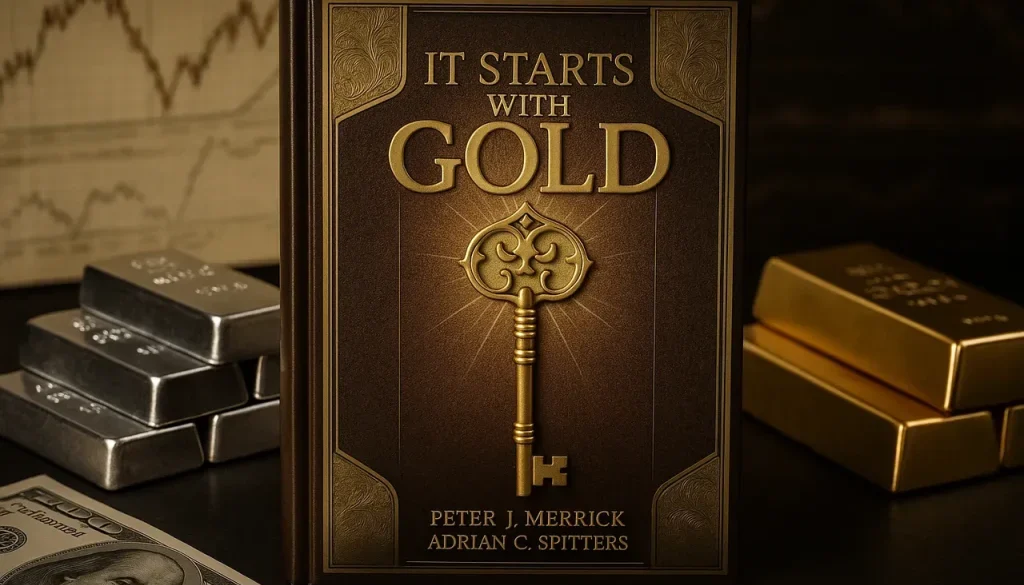
By Peter J. Merrick, TEP® and Adrian C. Spitters, CFP®, co-authors of the international bestseller It Starts With Gold™ and the forthcoming book Guns, Gold & Land™
This analysis continues a series of long-form investigations published in The Merrick Spitters Reset Report™

The Physical Shortage Now Exposing the Hidden Fragility of Global Finance
Silver has awakened. After years of drifting behind gold’s meteoric rise, the white metal has surged nearly sixty percent in just five months, closing above fifty dollars per ounce for the first time in history. What began as a quiet rally has erupted into deep structural strain. Beneath the surface, the paper silver system, which has long suppressed prices, is showing signs of severe structural stress.
The heart of this crisis beats in London, home to the world’s largest wholesale bullion market. It is here that silver’s true supply stress has become visible. The London Bullion Market Association’s “Good Delivery” 1,000-ounce bars, once abundant, have become scarce. Lease rates for physical metal have exploded to as high as thirty percent, according to Bloomberg. Bid-ask spreads, which typically hovered around three cents per ounce, have widened to over twenty cents. And perhaps most alarming of all, London’s spot price has overtaken New York’s futures price by as much as three dollars per ounce, a phenomenon known as backwardation.
Backwardation means one thing: a rush for physical metal. It reveals that immediate demand has overwhelmed future supply. The last time silver faced backwardation of this magnitude was in 1980, when the Hunt brothers tried to corner the market. This time, however, the pressure appears structural rather than speculative.
👉 Subscribe to The Merrick Spitters Reset Report™ and receive a digital copy of our international bestseller, It Starts With Gold™, along with our white paper, Last Asset Standing™ and early updates on our forthcoming book, Killing Crypto™.
The Collapse of Paper Silver
For decades, the illusion of infinite silver has been maintained by a mountain of paper promises. Exchange-traded funds, futures, and derivatives created a synthetic form of ownership that required no delivery. As long as confidence remained, this fractional system appeared stable. But confidence is vanishing. Today, there are an estimated three hundred and sixty ounces of paper silver for every real ounce in existence.
This imbalance has transformed the market into a powder keg. Every ounce of metal is now pledged hundreds of times over. When even a small percentage of investors demand physical delivery, the entire structure begins to fracture. That fracture is now visible in the physical market. London vault holdings have collapsed from 1.18 billion ounces in 2021 to only 790 million today, a one-third decline in just four years, with parallel trends highlighted in The Silver Institute’s World Silver Survey 2025.
The so-called “free float” supply, excluding exchange-traded fund reserves, is even smaller. Refineries approved by the LBMA, including Argor-Heraeus, Asahi, Heraeus, Metalor, MKS PAMP, the Royal Canadian Mint, and Valcambi, are struggling to meet demand. Delivery times are stretching, and premiums on physical bars are rising worldwide.
For the first time in modern memory, traders are airlifting one-thousand-ounce Good Delivery bars from COMEX vaults in New York to London to exploit the three-dollar spread between markets. Airfreighting silver is normally uneconomical, reserved only for gold, yet the price gap has become large enough to justify the cost. This logistical desperation underscores how fragile the paper system has become.
A Market Under Siege
The data confirm that the physical silver market is in historic distress. London’s inventory decline of more than thirty-three percent has created an environment where shortages ripple across the global supply chain. The industrial world’s hunger for silver is intensifying, while mining output stagnates.
Silver mine production peaked nearly a decade ago and has since declined as high-grade deposits are exhausted. At the same time, demand from the solar industry has tripled over four years, consuming an additional one hundred forty-three million ounces annually, according to The Silver Institute’s World Silver Survey 2025. Every solar panel, electric vehicle, and 5G transmitter depends on silver’s conductivity. This surge has transformed the metal from a precious commodity into a strategic resource at the core of the renewable energy transition.
Meanwhile, the structural deficit between global supply and demand, averaging one hundred fifty million ounces per year, has persisted for half a decade, as confirmed by The Silver Institute’s World Silver Survey 2025. Above-ground inventories continue to shrink as consumption outpaces production. The tighter these stocks become, the more vulnerable the system is to panic.
The Return of the Short Squeeze
The unfolding crisis is not just a supply issue. It represents a correction to decades of financial engineering. The largest bullion banks, including global institutions acting as swap dealers, hold massive short positions in silver futures. As of October 2025, these positions total approximately 43,932 contracts, or 272 million ounces, nearly one-third of the world’s annual silver production.
Much of this short exposure is unbacked by physical metal. It exists purely as paper bets designed to suppress prices and protect other financial instruments from volatility. When silver was languishing below thirty dollars, these positions were manageable. But as the price surges past fifty, the cost of maintaining them becomes catastrophic. For every one-dollar increase in silver’s price, these institutions lose roughly 272 million dollars.
This setup has all the ingredients of a historic short squeeze. The higher silver climbs, the more these traders are forced to buy back their positions to limit losses, which drives the price even higher. This feedback loop can spiral rapidly, producing a sharp price surge. It is the same dynamic that collapsed the nickel market in 2022 and has now returned to haunt the bullion sector.
The Psychological Threshold Has Been Broken
The fifty-dollar milestone carries immense psychological weight. It marked the ceiling of the great silver bull markets of 1980 and 2011. Both times, price suppression followed. But the context today is entirely different. The world now faces record sovereign debt, collapsing fiat credibility, and rising distrust in paper markets.
At fifty dollars in nominal terms, silver is still far cheaper than it was at the same level in 1980 or 2011 when adjusted for inflation. Its real value remains deeply undervalued. This breakout has confirmed a long-term technical pattern known as a “cup and handle” formation, which dates back to the 1960s. If the pattern completes, silver could potentially surge into the hundreds of dollars per ounce if current supply pressures persist.
Institutional investors have begun to notice. The iShares Silver Trust (SLV), the largest U.S. silver exchange-traded fund, has increased its holdings from 417.5 million ounces to 496.5 million over two years, a nineteen percent rise. Yet silver’s price has risen one hundred sixty percent over the same period. That mismatch implies significant catching up to come as funds and individuals alike rush to secure exposure to a rapidly appreciating asset.
The Global Ripple Effect
The crisis in London is not isolated. It mirrors a broader erosion of confidence in the Western financial architecture. The United States, Canada, the United Kingdom, and the European Union have all built their prosperity on paper leverage, debt, derivatives, and financialized promises of future payment. When those promises falter, the entire system feels the tremor.
Each nation relies on U.S. dollar liquidity to stabilize its financial structure. As the dollar’s credibility weakens, so does the foundation of their economies. A surge in physical metal prices signals the withdrawal of faith in these systems. It is a global flight to reality.
Canada, in particular, stands at a crossroads. Its currency is tethered to the U.S. financial cycle, and its citizens hold the majority of their wealth in paper assets, registered funds, mutual funds, and real estate. If the silver and gold revaluation accelerates, these paper valuations will be tested. Those holding physical assets outside the banking system will remain whole. Those who do not will find their purchasing power eroded.
Gold as Fortress, Silver as Catalyst
Gold remains the fortress, but silver is the catalyst. Gold preserves wealth. Silver multiplies it. The two metals move in tandem, yet silver’s smaller market and heavier industrial use make it more volatile and more explosive when paper confidence breaks.
If the historical gold-to-silver ratio of fifteen-to-one were restored, and gold stayed near four thousand dollars per ounce, silver would trade around two hundred sixty-six dollars per ounce. That ratio may not be reached overnight, but the direction is clear. Silver’s path leads upward as the paper system burns away.
This is not speculation. It is mathematics. With central banks purchasing record amounts of gold, with refineries backlogged, and with investors emptying vaults, the supply constraints have become structural. Silver’s revaluation may occur rapidly and could prove lasting.

The Case for Asset Security
At our firm, we guide clients to anchor their wealth in what endures. The cornerstone of this approach is Owning Assets in Order of Asset Security. It begins with the most dependable and permanent stores of value, physical gold and silver, then extends to income-producing private assets such as farmland and purpose-built multifamily real estate. Only once these stable foundations are in place should investors allocate capital to paper markets, which remain the most exposed to systemic and liquidity risks.
This approach is not about chasing returns. It is about survival. The global financial system is being re-priced in real time. Those who structure their portfolios around tangible value will not only preserve their capital but stand to benefit when the reset arrives. Those who do not may learn too late that paper wealth offers no refuge when confidence dies.
This is where theory meets practice, and where wealth preservation becomes a plan rather than a concept.
The Dawn of a New Monetary Order
The silver shortage is not a temporary disruption. It is a symptom of a global transition away from paper dependency toward tangible reality. The scarcity of physical bullion, the record demand for solar silver, and the mass short-covering by financial institutions all signal that a deeper reordering is underway.
This is how monetary history always evolves. Empires expand their money supply until the illusion of value collapses. Then, the world rediscovers tangible anchors. Silver’s resurgence is that rediscovery in real time. It represents both an end and a beginning, marking the transition from artificial finance to the rebirth of honest money.
For individuals, the window to act is narrow but still open. Taking control of one’s wealth means reducing exposure to centralized systems and increasing ownership of assets that exist outside of them. Precious metals are not investments in the traditional sense. They are instruments of sovereignty.
What Happens Next
As paper silver contracts, a bifurcated market will emerge. The price quoted on exchanges will lose relevance, while physical prices set by private dealers, mints, and vaults will establish a new benchmark. Already, premiums for immediate delivery in Asia exceed Western spot rates by more than twenty percent. This divergence will widen.
If this bifurcation continues, digital silver holders may find that their claims lose practical value. The holders of physical bullion will hold the last honest form of money. It is not merely about wealth. It is about freedom.
A Call to Prepare
The unravelling of the paper silver market is the final warning before the great monetary reset. Investors, families, and business owners have one remaining opportunity to act while markets still function. The prudent will convert digital wealth into physical form. The unprepared will be left exposed to paper market failures.
At our firm, we assist clients in structuring portfolios for the era ahead. We offer complimentary reviews designed to identify exposures to systemic risk and to realign assets according to the hierarchy of security. The foundation begins with gold and silver, extending through private real estate and income-producing assets that survive inflation, taxation, and financial repression.
👉 Subscribe to The Merrick Spitters Reset Report™ and receive your complimentary digital copy of It Starts With Gold™, along with our white paper Last Asset Standing™ and early updates on our upcoming release Killing Crypto™.
The future belongs to those who own what cannot be printed. Protect what you still control. Because when wealth depends on permission, freedom is already gone.
Stay informed, stay prepared, and act while choice still exists.
These insights connect directly to the themes explored in It Starts With Gold™, co-authored by Peter J. Merrick, TEP® and Adrian C. Spitters, CFP®. Inside the book, we show how to establish a tangible-asset foundation, measure security across asset classes, and safeguard against systemic shocks while maintaining control of your future. Visit www.ItStartsWithGold.com.
Prefer a hard copy? Order It Starts With Gold™ on Amazon today.
References
- Bloomberg: “Silver Extends Gains on Short Squeeze as Gold Rallies to Record.” October 2025
- BullionVault: “Silver Squeeze Tightens, Metals’ Price Volatility Attracts Energy Traders.” October 15, 2025
- World Gold Council: “Gold Demand Trends” Q2 2025
- GoldSilver: “The Quiet Revolution in Central Bank Gold Buying”
- Morgan Stanley: “Gold Price Rally 2025: Drivers and Opportunities”
- Business Insider: “Silver Hit New Record in London Amid Short Squeeze”
- Economic Times. “Historic Silver Crunch in Market – Shortage Rivals 1980s Legendary Squeeze.”
- Economic Times. “Silver Can Shine Another 20% After Remarkable 70% Rally.”
- Business Insider. “Why Silver Is Riskier Than Gold, According to Goldman Sachs.” markets
- Reuters. “HSBC Raises Average Gold Price Forecasts for 2025 and 2026”
- Jerusalem Post. “Understanding the Current Silver Squeeze.” October 2025
- The Bubble Bubble. “Understanding the Current Silver Squeeze” October 2025
- World Silver Survey 2025 (PDF) – The Silver Institute
- YouTube. “Paper Silver IMPLODES: Experts Predict HUNDREDS PER OUNCE Is Coming.” Man in America, October 2025
Disclaimer
This publication is intended for informational and educational purposes only. It does not constitute financial, legal, tax, or investment advice, and should not be relied upon as a recommendation to buy or sell any security, investment fund, or financial product. The views expressed are those of the authors and do not necessarily represent those of any affiliated organization or regulated firm. While every effort has been made to ensure accuracy, completeness, and reliability, no representation or warranty, express or implied, is made as to the accuracy or timeliness of the information contained herein. Market conditions, government policies, and economic environments are subject to change without notice, and such changes may materially affect the opinions or projections discussed. All investments carry risk, including the potential loss of principal. Past performance is not indicative of future results. Real estate values, interest rates, and government regulations can fluctuate significantly, impacting the outcomes of any financial or investment decision. Readers are encouraged to consult directly with a qualified financial advisor, tax professional, or legal expert before taking action based on the content of this article. The discussion of laws, markets, and asset classes is presented for general insight only and should not be interpreted as personalized advice. The authors, Peter J. Merrick, TEP®, and Adrian C. Spitters, CFP®, provide professional advisory services through independent affiliations with regulated financial firms. Neither the authors nor any related entity accepts liability for any losses or damages arising from reliance on this publication or the information contained herein. By reading this article, you acknowledge and agree that the authors shall not be held responsible for any actions taken based on the information presented. For personalized advice tailored to your financial situation, please consult with a licensed financial professional.