Why Canadians Are Being Denied Their Resource Wealth
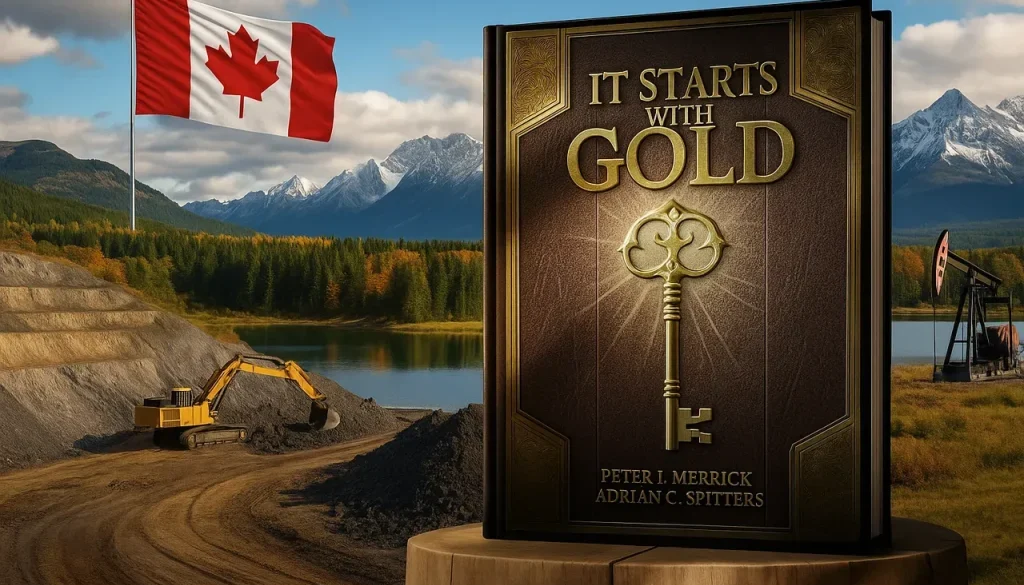
By Peter J. Merrick, TEP® and Adrian C. Spitters, CFP®, co-authors of the international bestseller It Starts With Gold™ and the forthcoming book Guns, Gold & Land™
This analysis continues a series of long-form investigations published in The Merrick Spitters Reset Report™
This article represents the author’s opinion and is intended to inform and invite respectful discussion. It is based on publicly available data, credible sources, and professional observation. Readers are encouraged to verify facts, share perspectives, and engage constructively.
What Canada could gain if its full natural potential were unleashed
This article explores a growing debate about Canada’s economic direction, resource policy, and sovereignty. It challenges the assumption that climate compliance must come at the cost of prosperity, and argues that Canada’s most valuable assets are being suppressed by foreign-influenced mandates that do not serve the public interest.
A Nation Rich in Resources, Poor by Choice
Canada possesses an estimated 170 billion barrels of recoverable oil, 2,400 trillion cubic feet of natural gas, the world’s second-largest uranium supply, and vast critical mineral reserves including lithium, cobalt, nickel, and rare earth elements. It holds 347 million hectares of forest and 9 percent of the planet’s renewable freshwater.
This natural wealth is conservatively valued at over $60 trillion CAD. If even 30 percent of this were realized through royalties, taxation, and equity participation, it could generate $18 trillion for the public good. That equates to $450,000 per Canadian citizen.
Yet these resources remain underutilized, locked beneath regulatory, environmental, and ideological barriers. Instead of prosperity, Canadians are told the country is broke. Services are being cut, taxes are rising, and families are struggling to pay for housing, food, and energy.
The Oil and Gas Example: A Case Study in Suppression
At $80 USD per barrel, Canada’s oil reserves represent more than $18 trillion CAD. That alone could erase the federal debt multiple times over. Natural gas has a similar untapped potential.
Despite this, major pipelines have been cancelled. LNG terminals are stalled. Carbon taxes and Clean Fuel Standards have made development economically unviable.
Meanwhile, Norway built a $1.6 trillion USD sovereign wealth fund from a fraction of Canada’s reserves. Canada had the same opportunity but chose global compliance over national benefit.
Minerals and Uranium: Missing the Energy Transition
Canada ranks among the world’s top producers of nickel and cobalt and has vast deposits of uranium in the Athabasca Basin. These are essential to both clean energy and defence. Still, projects remain delayed or abandoned due to environmental and social governance mandates that treat development as inherently harmful.
The result is a missed opportunity to lead in energy transition minerals, while China aggressively expands its control over global supply chains. Where Canada delays, others dominate.
Forestry and Freshwater: Ignored Strategic Assets
Canada’s forests and freshwater are among the world’s most renewable and valuable resources. Instead of leveraging them for the public good, Ottawa is promoting rewilding and centralized restrictions. Logging towns in British Columbia are dying. Water remains under-managed and underleveraged, even as global scarcity grows.
Provincial Pushback Is Growing
Alberta, Saskatchewan, and other provinces are beginning to reject Ottawa’s one-size-fits-all compliance model. From the Alberta Sovereignty Act to uranium development autonomy, a new federal-provincial conflict is unfolding. The national divide is widening as local leaders attempt to preserve economic viability against imported mandates.
The Manufactured Scarcity Morality
Canadians are being asked to accept less energy, less food, less homeownership, and less prosperity as a moral good. This is not environmentalism. It is enforced scarcity.
Meanwhile, countries like India, Saudi Arabia, and China are ramping up resource extraction and securing trade routes. They are playing to win. Canada is being told to forfeit.
Who Is Really Making the Rules?
Canada’s economic policies are increasingly shaped by unelected institutions such as the World Economic Forum, the United Nations, and ESG policy networks. Climate compliance frameworks like Agenda 2030, Agenda 2050, and Net-Zero Industry Tracker now influence financial and regulatory decisions with no democratic oversight.
According to the C.D. Howe Institute, billions in capital are fleeing Canada because of the chilling effect of these mandates. These are not abstract ideas. They are tangible, measurable impacts on job creation, tax revenue, and national wealth.
Mark Carney: The Global Installation
As of June 14, 2025, Mark Carney has been sworn in as Prime Minister of Canada. He fronts a system of technocratic control built by unelected global institutions. He is not just a candidate; he is at the helm of a structure that sidelines democratic input in favour of resilience frameworks authored by those same institutions.
He is not alone in this. His rise is part of an international installation orchestrated by the WEF, global asset managers via GFANZ, the UN, the IMF, and others aligned with his agenda. His time as UN envoy, vice chair of Brookfield Asset Management, and advisor to the Liberal Party and Trudeau prepared the ground. Now, under his leadership, Canada may fly its flag while losing control over resources, currency, and economy.
A Way Out Exists
Canada can reverse course without abandoning sustainability. The country needs to establish a national sovereign wealth fund, reform permitting, and prioritize Indigenous economic partnerships that include real equity.
It must exit from frameworks that undermine democratic control and instead build domestic policies rooted in development, not deference.
Gold remains one of the last assets Canadians can physically own without surveillance or institutional control. That is why real sovereignty begins with real, tangible wealth.
The Cost of Inaction
Young Canadians face the steepest financial climb in generations. Wages are stagnant. Housing is unaffordable. Debt is rising. And future opportunities are being erased. This is not a resource crisis. It is a leadership crisis.
Canadians are not poor. They are being restrained. Every citizen could be significantly wealthier if this country reclaimed its rightful inheritance. Instead, they are being asked to settle for less in the name of abstract virtue.
What You Can Do
-
-
- Demand that your province develop a sovereign wealth fund
- Support economic autonomy and decentralization
- Reject ESG mandates and ideologies that suppress growth
- Support Indigenous-led partnerships that drive real development
- Share this article and start the conversation
-
The ideas in this article are explored further in the international best-selling book, It Starts With Gold™, by Peter J. Merrick and Adrian C. Spitters. Learn how financial control is shifting from citizens to global institutions and what you can do about it.
👉 Visit www.ItStartsWithGold.com or find the book on Amazon.
🔗 References
- Proven Oil Reserves in Canada – Statista
- Crude Oil Facts – Natural Resources Canada
- Canada’s Natural Gas Resources – Canadian Energy Centre
- Uranium and Nuclear Power – World Nuclear Association
- Forest Resources – NRCAN
- Freshwater in Canada – ECCC
- Critical Minerals – Government of Canada
- Global Demand – IEA
- Canada Federal Debt – CRA
- Healthcare Wait Times – Fraser Institute
- Norway’s Sovereign Fund – NBIM
- Net-Zero Emissions – Government of Canada
- Clean Fuel Regulations – Government of Canada
- Net-Zero Tracker – WEF
- ESG Market – RIA Canada
- Capital Flight – C.D. Howe Institute
- Cedar LNG – Haisla Nation
- LNG Canada – Project Overview
- Mark Carney – WEF Profile
- GFANZ – Glasgow Financial Alliance for Net Zero
- Brookfield – Climate Strategy